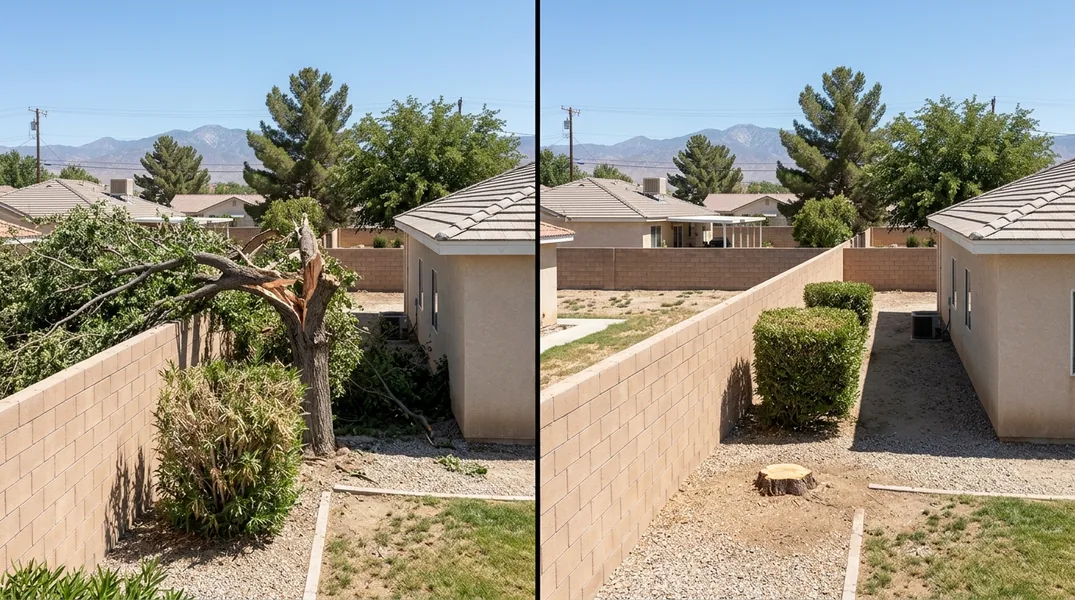
Understanding the Difference: Tree Trimming vs. Tree Removal
When you're standing in your yard looking at a problem tree, the question often comes down to one thing: does this tree need to be saved or removed? The answer isn't always obvious to homeowners, but it's a decision that professional arborists in Lancaster make every single day.
Tree Trimming & Pruning is a maintenance practice designed to improve a tree's health, appearance, and safety by removing dead, diseased, or overgrown branches. When done correctly, trimming encourages new growth, improves air circulation through the canopy, and reduces the risk of branch failure. It's a way to keep your tree thriving for years to come.
Tree Removal, on the other hand, is a more serious intervention. It involves taking down the entire tree and is typically reserved for situations where the tree is beyond saving, poses a safety risk, or is causing damage to your property. While removal is sometimes necessary, it's always a last resort for experienced arborists who understand the value of mature trees.
The key difference boils down to this: trimming preserves and improves, while removal eliminates. Understanding when each approach is appropriate can save you money, protect your property, and preserve the natural beauty of your Lancaster landscape.
Signs Your Tree Needs Trimming, Not Removal
A healthy tree with manageable issues is almost always a candidate for trimming. If your tree is structurally sound but simply overgrown, has dead branches, or is crowding other plants, trimming is the right choice. Professional arborists look for several positive indicators that suggest a tree can be saved through proper maintenance.
Trees that respond well to trimming typically have good branch structure, no major trunk damage, and signs of active growth. If you notice dead or diseased branches making up less than 25 percent of the canopy, the tree is likely salvageable. Trees with crossing branches, branches rubbing together, or limbs growing too close to your roof or power lines are excellent candidates for tree pruning in Lancaster. Regular trimming not only improves safety but also enhances the tree's appearance and encourages healthier, stronger growth patterns.
Another sign that trimming is appropriate is if the tree is young or relatively young with good vitality. Young trees respond exceptionally well to pruning and can be shaped to grow in desirable directions. If you're concerned about a tree's health but it still has green foliage and active growth, contact an experienced arborist for an evaluation before assuming removal is necessary.
Red Flags: When Tree Removal Is the Right Choice
Sometimes, despite our best efforts, a tree simply cannot be saved. Professional arborists in Lancaster recognize certain warning signs that indicate removal is the safest and most practical option. These red flags help homeowners understand why removal, though expensive and sad to consider, is sometimes the responsible choice.
A tree with significant trunk damage, deep cracks, or hollow sections that comprise more than 25 percent of the trunk diameter is structurally compromised and dangerous. Trees infested with destructive pests like bark beetles or showing advanced signs of disease like extensive canker damage are often beyond recovery. If a tree is leaning significantly, has major branches already broken or hanging, or has roots that are lifting pavement or threatening your foundation, removal prevents costly property damage and injury.
Trees that have already lost more than 50 percent of their canopy, are completely dead, or are growing in locations where they continually interfere with utilities, structures, or sight lines may also be candidates for removal. Additionally, if a tree is of a species known to be invasive or problematic in your region, removal might be the best long-term solution for your landscape. When you're uncertain, an experienced arborist can provide a professional assessment and recommend whether trimming efforts are worthwhile or if removal is the safer path forward.
How an Experienced Arborist Makes the Decision
The process of deciding between trimming and removal isn't guesswork. Experienced arborists follow established standards and use their training to evaluate tree health, structure, and risk. When you call Lancaster Tree Service for a consultation, our team conducts a thorough inspection using industry best practices.
An arborist evaluates the tree's overall health by checking for signs of vigor, disease, pest damage, and structural integrity. They assess the tree's location relative to structures, power lines, and other landscape features. They consider the tree's species, age, and whether it provides value to your property in terms of shade, privacy, or aesthetic appeal. They also examine whether the tree is a native species that supports local wildlife or an invasive variety that should be removed.
The decision ultimately comes down to cost-benefit analysis. If trimming the tree will cost less than removal and the tree will remain healthy and safe, trimming is recommended. If the tree is dying, structurally unsound, or poses an ongoing risk, removal is the prudent choice. Our arborists also consider whether the tree can be saved through phased trimming over time or whether immediate removal is necessary for safety reasons. This professional evaluation takes the guesswork out of your decision and ensures you're making the choice that's best for your property and budget.
Tree Trimming Services in Lancaster: Maintaining Tree Health Year-Round
Regular tree trimming in Lancaster is one of the smartest investments you can make in your landscape. Homeowners who maintain their trees with periodic trimming enjoy healthier plants, safer properties, and better-looking yards. The key is understanding when and how often your specific trees need attention.
Most trees benefit from trimming every three to five years, though this varies based on species, age, and growth rate. Young trees often need more frequent trimming to establish good structure, while mature trees may need less frequent maintenance. Spring and early summer are ideal times for most trimming work, as trees heal faster when they're actively growing. Dead branches can be removed safely year-round, but major pruning is best avoided during late fall and winter when trees are dormant.
Professional trimming does more than just improve appearance. It reduces disease risk by removing infected branches before pathogens spread. It improves air circulation, reducing fungal issues and allowing sunlight to reach lower branches. It eliminates hazardous dead wood that could fall during storms. It also encourages stronger branch angles and reduces the likelihood of branch failure. If you've been putting off tree maintenance, now is the time to schedule a free estimate from Lancaster Tree Service at (661) 466-4378.
When to Call a Professional: Avoiding DIY Tree Work
Many homeowners are tempted to trim or remove trees themselves to save money. While small branches can sometimes be safely removed with proper tools and training, most tree work should be left to professionals. Tree work is inherently dangerous and requires specialized equipment, training, and insurance.
Professional arborists have the knowledge to make cuts that promote healing and proper tree structure. They understand how to safely work at height with power tools and heavy equipment. They know how to handle dangerous situations like trees near power lines or unstable trees that could fail unexpectedly. They carry liability insurance to protect you if something goes wrong. Most importantly, they understand tree biology and can make decisions that preserve tree health rather than causing long-term damage.
If you're facing a decision about whether your tree needs trimming or removal, the safest approach is to consult with an experienced arborist. Lancaster Tree Service has been helping homeowners throughout the region make informed decisions about their trees. Call us today at (661) 466-4378 or visit our website to schedule a consultation. Our arborists will evaluate your tree's condition and recommend the best course of action, whether that's professional trimming to restore health and safety or removal if the tree cannot be saved.
Looking for a professional tree service contractor in Lancaster? Lancaster Tree Service responds fast for all your tree service needs.
Get a Free QuoteOur services: Tree Removal · Tree Trimming & Pruning · Stump Grinding